

EDUCATION-TO-CAREER ECOSYSTEM CONSULTING
Your problem isn’t programs.
It’s the ecosystem around them.
THE BULLS ACADEMY • DURHAM, NC
96%
Completion rate; up from 55% at BULLS launch
100+
BULLS alumni employed across 24 companies
$43K
Average starting wage, no four-year degree
13+
BULLS cohorts built, tested, and refined
BUILT WITH, AND HIRING FROM, PARTNERS WHO MAKE IT WORK:







SOUND FAMILIAR?
You've invested in programs, but the results haven’t followed.

Seats you’re not filling.
Training capacity exists, but the community connections needed to reach and recruit the right people aren't in place. Seats go unfilled, or they're filled by students who aren't the right fit.

Students who aren’t finishing.
Students start motivated but drop out along the way. Without coaching and support that address real barriers, even committed students can struggle to finish. It's hard to tell where things break down.

Graduates who haven’t landed.
A credential alone doesn't guarantee a job. Strong employer relationships help graduates find opportunities that lead to lasting careers. Transactional partnerships produce placements that don't stick.

Years you won’t get back.
Building an effective program takes time, often years. Meanwhile, students move through programs that haven't yet reached their full potential. Cohorts don't get a second chance while you’re learning.
WE BUILT SOMETHING INTENTIONAL IN DURHAM.
We didn't repurpose a model. We built one, broke it, and then rebuilt it.
The BULLS Life Sciences Academy launched in 2020 as a partnership between Made in Durham, Durham Technical Community College, and the NC Biotechnology Center.
The program recruits 18- to 25-year-olds from communities often overlooked by traditional training programs, guides them through a 17-week credential program, and connects graduates with life sciences employers.
Our first cohorts had a 55 percent graduation rate. Our recent cohorts graduate at 96 percent. Everything between those two numbers is what we teach. Cohorts don't get a second chance while you're learning.
Recognized by the NC Biotechnology Center as the community engagement model within the Accelerate NC coalition.
THE THREE PILLARS WE TEACH:
-
Paid community ambassadors, strategies to address barriers to participation, and warm handoffs that help recruit the right students.
-
A 12:1 success coaching model, wraparound supports, and a stipend structure that rewards commitment without buying it.
-
A two-customer model that serves both graduates and employers, building relationships with HR teams and frontline managers.
THE LEARNING CURVE, COMPLETED FOR YOU.
It took us five years to move this line. You don't have that long.
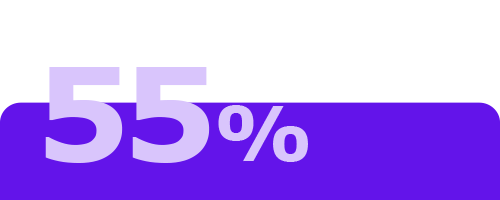
COHORTS 1 - 5 | 2020 - 2023
Finding out what didn’t work.
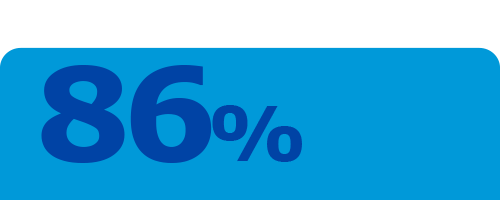
COHORTS 6 - 8 | 2023 - 2024
The coaching model takes hold.
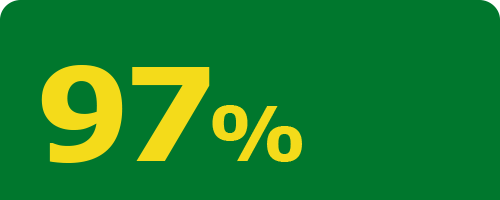
COHORTS 9 - 12 | 2024 - 2026
The full ecosystem is working.
HOW WE WORK:
Start where you are.
Take only what you need.
You may not need every part of our model. We'll help you identify what makes sense for your community now and what you can build on your own over time.
01 - Understand
Assessing from the balcony
We come to your community, learn what's already in place, and assess what's needed to build a stronger workforce ecosystem. You'll get a clear picture and an actionable plan, whether or not you continue working with us.
Includes:
Ecosystem overview sessions
Landscape assessment
Task force facilitation
Goal setting & funding roadmap
02 - Build
Moving onto the dance floor
We work alongside your team to put the right pieces in place. Every workshop draws from the BULLS Playbook, a comprehensive guide to the processes we've developed, tested, and refined in Durham.
Includes:
Community & youth recruitment
Success coaching model training
Alumni & employer engagement
Org structure & staffing design
03 - Sustain
Evolution and transition
Ecosystems change. We help you navigate institutional transitions, shift responsibilities between partners, and establish accountability structures that maintain program quality as leadership and organizations evolve.
Includes:
Program evaluation support
Strategy & roadmap facilitation
Implementation coaching
Data & measurement frameworks
Comprehensive services.
Pick the ones that fit.
Our catalog is a menu, not a package. Most engagements combine two or three offerings across categories.
Ecosystem Overview
4 OFFERINGS
Presentations, series, written briefings, and conference keynotes for teams exploring how this model could work in their communities.
Assessment & Planning
4 OFFERINGS
Landscape assessments, task force facilitation, funding roadmaps, and evaluation framework design.
Deployment Support
6 OFFERINGS
Hands-on workshops covering recruitment, coaching, employer engagement, organizational design, and coach learning communities.
Evaluation & Strategy
3 OFFERINGS
Program evaluation, strategy facilitation, and ongoing implementation coaching. Standalone or bundled.
PERSPECTIVE“The Academy is a partnership model with very clear process and outcome goals and targets. Developed locally, the model draws from best practices nationally.”
—David Dotson, Board Member, Made in Durham · President Emeritus, MDC
WHO WE WORK WITH
If any of these is you, we should talk.
We work with communities building new workforce programs and organizations looking to improve existing ones. Our approach adapts to the needs of each.

Economic development organizations building regional talent strategies that earn employer support
Community colleges with training capacity that isn't reaching the populations it was funded to serve
Chambers and workforce boards connecting employers to a talent pipeline that doesn't yet exist
Employers investing in training partnerships but still struggling to hire and retain workers
Funders and intermediaries seeking measurable economic mobility through their workforce investments
These are the questions we get asked first.
Straight answers. If yours isn’t here, use the form below.
-
Yes, and that's how most engagements start. Our catalog includes nineteen separate offerings across four categories, so you can select a single piece without buying the whole model. If your education and training pipeline is solid but employers aren't engaging, we work only on employer and alumni engagement. If you've got employers at the table but students aren't finishing, we come in on academic success coaching and the support structures underneath it. If you need a community ambassador model designed or a coaches' professional learning community built, those are standalone pieces of work.
We do ask that you let us look at the whole ecosystem first, even briefly, before we scope the work. Not to upsell you. It's because the piece that looks broken isn't always where the problem started, and we'd rather tell you that in week one than take your money fixing the wrong thing. That look can be as simple as a single overview session. Single-session engagements are paid in full upon completion, so there's no long-term commitment to find out whether we're useful to you.
-
Yes. What we built in Durham was a workforce ecosystem, not a life sciences program. Life sciences is where we started because NC Biotech gave us a clear set of employers to align around, but the three pillars of our model- education and training, community engagement, and employer and alumni engagement- are not industry-specific. What changes from one sector to the next is the credential and the employers involved. The ecosystem design holds. We've had this conversation with people in advanced manufacturing, healthcare, and IT, and the framework translates.
-
It depends on where you're starting. An ecosystem overview session, where we walk your team and partners through how the model works and what it took to build it, starts at $2,500. A full landscape assessment, where we map your existing ecosystem, identify gaps, and come back with a plan, runs $8,000 to $15,000 depending on the size of the region and how many partners are at the table. Build mode engagements are scoped to cohort size. For multi-session work, we take a 50 percent deposit up front, with the balance due at completion. If the work runs past thirty days, we can invoice monthly instead.
-
You'll have an assessment and a plan in four to six weeks. Real movement in outcomes takes a full cohort cycle, roughly five months, and most places see meaningful gains by the second or third cycle once the ecosystem starts reinforcing itself. For context, we went from 55 percent completion to 96 percent over about four years and thirteen cohorts. We're not going to tell you it happens in a quarter. What we will tell you is where the leverage is, so you're not spending three years learning what we already learned.
-
Our people, not subcontractors. Casey Steinbacher leads ecosystem strategy and overview engagements. Dominique Oliver and Rasheed Bellamy lead deployment and evaluation work. When the engagement calls for it, our program directors co-deliver workshops in their own areas of expertise, so you're hearing from the person who actually ran the thing, not someone reading a deck about it.
START HERE.
One conversation. No pitch deck.
Tell us what you're working on. We'll tell you what we see, what it would take, and whether we're the right partner for it. If we're not, we'll say so and help you find one.
Prefer to reach out directly?
Rasheed Bellamy
Chief Operations Officer
rbellamy@madeindurham.org